
Experts in English Interpretation in Brazil: The High-Level Global Link
The dominance of English as the language of international business is unquestionable. In Brazil, a country ranked among the world’s largest economies, English interpretation is not merely a translation need; it is a strategic tool for legal compliance, operational efficiency, and corporate diplomacy. In a market where the Anglosphere—comprising powers such as the U.S., the U.K., Canada, and Australia—accounts for a massive share of Foreign Direct Investment (FDI), technical linguistic precision is the asset that enables billion-dollar mergers and acquisitions (M&A), international arbitration, and the implementation of critical infrastructure.
Our expertise focuses on high-level mediation between foreign delegations and key players in the Brazilian market, ensuring technical and legal alignment in full compliance with regulatory bodies such as ANTAQ, ANP (National Petroleum Agency), CVM (Securities and Exchange Commission), and BNDES guidelines.
The Maritime Sector and Commodity Logistics (Anglo-Maritime)
Brazil’s global export logistics, whether for iron ore or agribusiness, depend fundamentally on shipping operations conducted in English. Vale and Petrobras use English as the standard language in all their international charter contracts. We operate in all major Brazilian ports, such as the Port of Santos and the Port of Paranaguá.
Logistics and Class Surveys
Class Surveys and Audits: Language support for safety inspections (PSC – Port State Control) conducted by the Brazilian Navy and global classification society auditors such as Lloyd's Register (United Kingdom) and DNV (Norway, operating in English). We assist technical inspectors on bulk carriers (bulkers) owned by companies such as Star Bulk and Costamare.
Large-Scale Port Operations: Technical mediation at automated terminals operated by APM Terminals and DP World (Dubai, using English as the language of operation), ensuring operational compliance in cargo handling and bunkering.
Chartering Negotiations
Charterparty negotiations are conducted exclusively in English, using complex legal and maritime jargon.
Dispute Mediation: Interpretation during meetings regarding Laytime and Demurrage clauses, Notice of Readiness (NOR), and Bill of Lading (B/L) disputes to avoid costly international arbitration.
Transportation Contracts: Support at maritime freight negotiation tables for agribusiness giants such as Cargill and Cofco International.
Oil, Gas, and Offshore Energy (Anglo-American Sector)
The energy sector is one of the largest users of technical English interpretation in Brazil, especially with the development of the Pre-Salt layer. Operations are global, with technology and capital from the U.S. and the U.K.
FPSO Platform Operations: Technical language support for operational training and safety audits on Petrobras FPSO platforms operated by companies such as *Modec (Japan, using English as the technical operational language) and SBM Offshore.
Exploration and Production (E&P): Interpretation at high-level meetings regarding farm-in and farm-out contracts with foreign operators such as Shell, Equinor, and TotalEnergies (France, using technical corporate English).
Renewables and Green Hydrogen: Technical mediation in offshore wind energy projects and green hydrogen plants, connecting Dutch and German technologies to the Brazilian market through English.
Financial Markets, M&A, and International Law
Faria Lima and Rio de Janeiro’s financial district rely on English to access global capital. Mergers, acquisitions, and IPOs of Brazilian companies are negotiated in English.
Mergers and Acquisitions (M&A): Interpretation during due diligence processes, Share Purchase Agreement (SPA) negotiations, and post-merger integration meetings for investment banks such as Itaú BBA, BTG Pactual, and private equity funds.
Corporate Law and Arbitration: Language support in international commercial arbitrations conducted under ICC (International Chamber of Commerce) rules and in corporate disputes.
Compliance and Investor Relations: Interpretation during earnings calls and compliance meetings based on legislation such as the FCPA (U.S.) and the UK Bribery Act (United Kingdom).
Strategic Presence in Economic and Port Hubs (Local SEO)
We serve the main decision-making centers and operational hubs in Brazil with specialized on-site support:
São Paulo (SP): Focus on M&A, Finance, Cybersecurity, and corporate headquarters in Faria Lima and Berrini.
Rio de Janeiro (RJ): Hub for Oil and Gas (ANP, Petrobras), Energy, and Maritime Arbitration.
Santos (SP): The largest port in Latin America, where maritime technical interpretation is a constant need.
Brasília (DF): Focus on diplomacy, bilateral agreements, and government relations.
Paranaguá (PR) and Vitória (ES): Hubs for the export of agricultural commodities and iron ore.
Pecém Complex (CE): Hub for Green Hydrogen exports and innovation, with Dutch management and international capital, using English as the high-level operational language.
Frequently Asked Questions (FAQ)
Why is technical maritime interpretation in English critical in Brazilian ports? The shipping industry operates under global standards in English. A translation error during a Lloyd’s Register class survey or in a demurrage clause can ground a bulk carrier (bulker) owned by companies like Star Bulk, resulting in fines of tens of thousands of dollars per day and blockades by ANTAQ or the Brazilian Navy.
What is the role of an English interpreter on FPSO platforms? Platforms such as those operated by Modec or SBM Offshore are high-risk multinational environments. The technical interpreter ensures that safety training (HSE), operating procedures for complex equipment, and ANP technical audits are fully understood by Brazilian crews, mitigating the risks of accidents and operational stoppages.
Do you handle international arbitrations conducted in English in Brazil? Yes. We handle commercial arbitrations under ICC rules and other corporate and maritime dispute forums. Our interpreters are fluent in the complex legal and commercial jargon required to ensure due process and legal certainty for foreign parties.
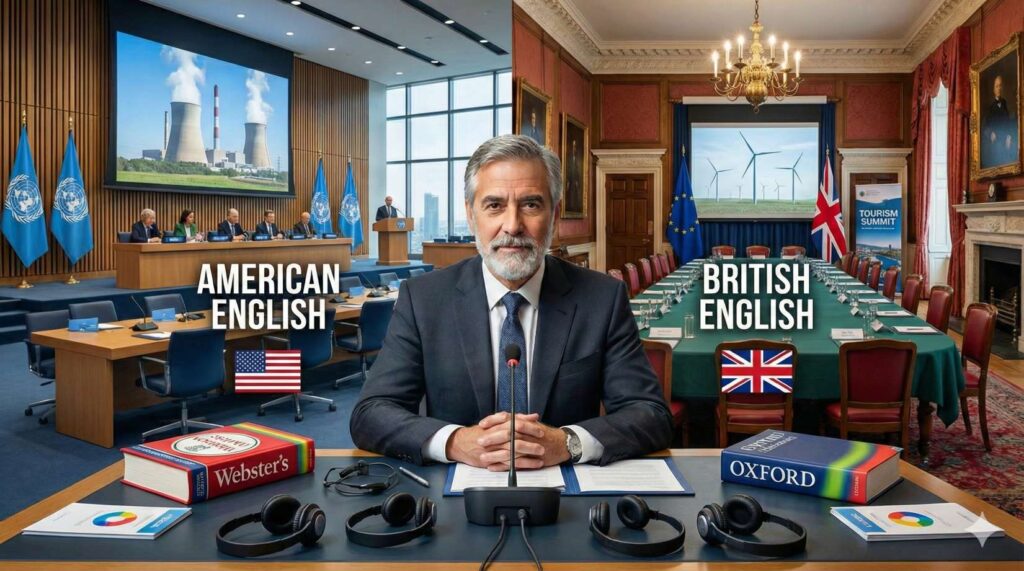
Which variant of English is most commonly used in business in Brazil? We work with English as a Lingua Franca (ELF), capable of seamlessly transitioning between American English (standard in Oil & Gas and M&A), British English (standard in Shipping and Insurance), and the global corporate English used by foreign operators such as Shell or Equinor.
Experience, Expertise, Authority, and Trust (EEAT)
Our technical authority is built at the intersection of the sophistication of the Brazilian corporate market and the demands of the Anglosphere. Our track record includes support in M&A processes led by investment banks, safety audits on Petrobras FPSO platforms conducted by international shipowners, and technical inspections of ships in the Greek and Norwegian fleets operating in English. We have the expertise to operate in Maritime Arbitration and Admiralty Law forums, ensuring that no detail of the technical-legal jargon is “lost in translation.” Our mission is to eliminate the risk of misinterpretation in strategic sectors, where precise communication is the foundation of safety and profitability.
Strategic Presence: Where We Provide English Interpretation Services in Brazil
English Interpreter in Camaçari | Petrochemical Complex and Electric Vehicles
English Interpreter in Carapicuíba | Simultaneous Interpretation and Logistics
English Interpreter in Diadema | Simultaneous Interpretation and the Chemical Industry
English Interpreter in Anápolis | Simultaneous, DAIA, and Pharmaceutical
English Interpreter in Maringá | Simultaneous, Agricultural, and IT
English Interpreter in Betim, Minas Gerais | Simultaneous Interpretation and the Automotive Industry
English Interpreter in Boa Vista | Simultaneous, Agricultural, and Logistics
English Interpreter in Montes Claros | Simultaneous Interpretation and Biotechnology
Types of interpretation

I thoroughly enjoyed my studies. Although my progress was too slow for my liking, the individual lessons helped me develop automaticity in speaking, expand my vocabulary, and improve my reading skills. Listening comprehension remains the most challenging aspect. Thank you.
Alain
Talk.fr Talk.br Talk.com Talk.uk
Our latest posts
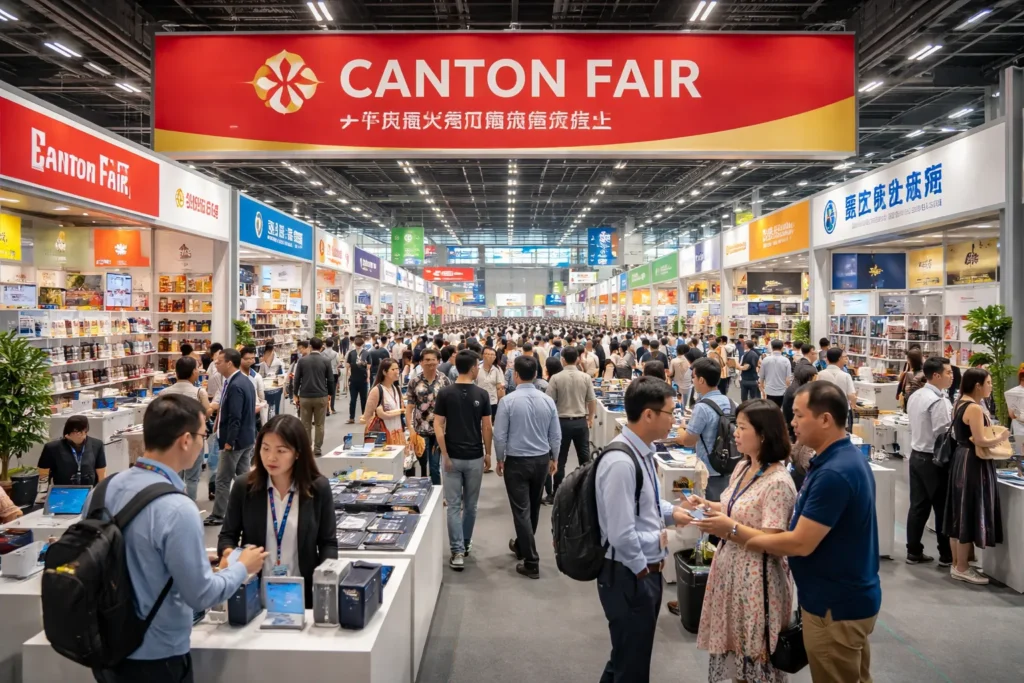
Canton Fair 2026: The Definitive Guide for Brazilian Buyers

World Environment Day: The Urgency of Conservation and China’s Role in Global Decarbonization
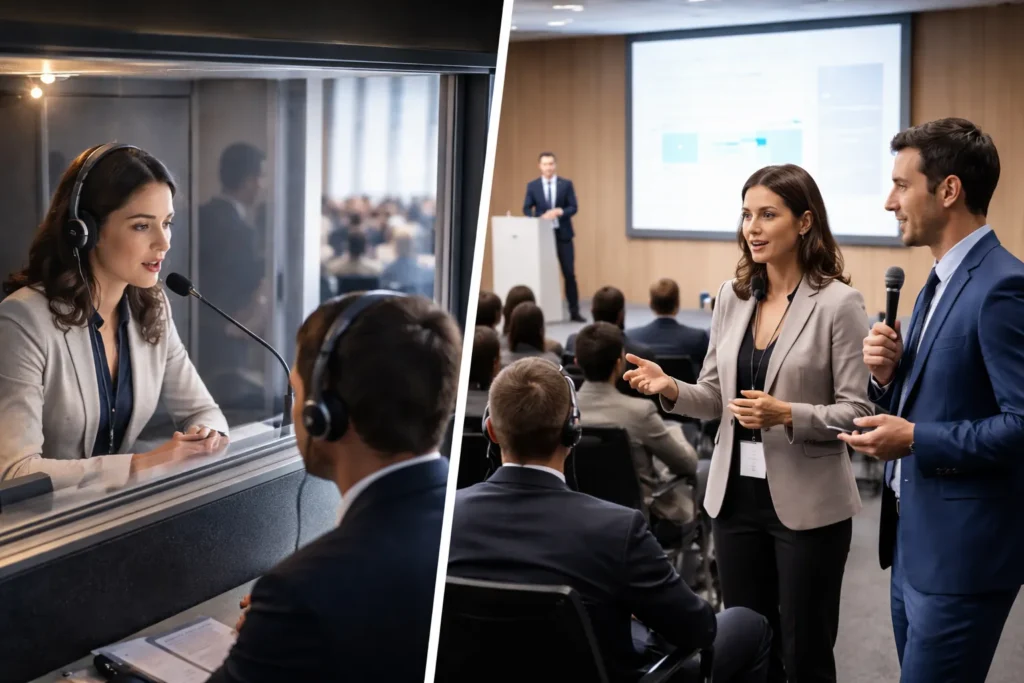
Simultaneous or Consecutive Interpretation: Which Is Best for Your Event?
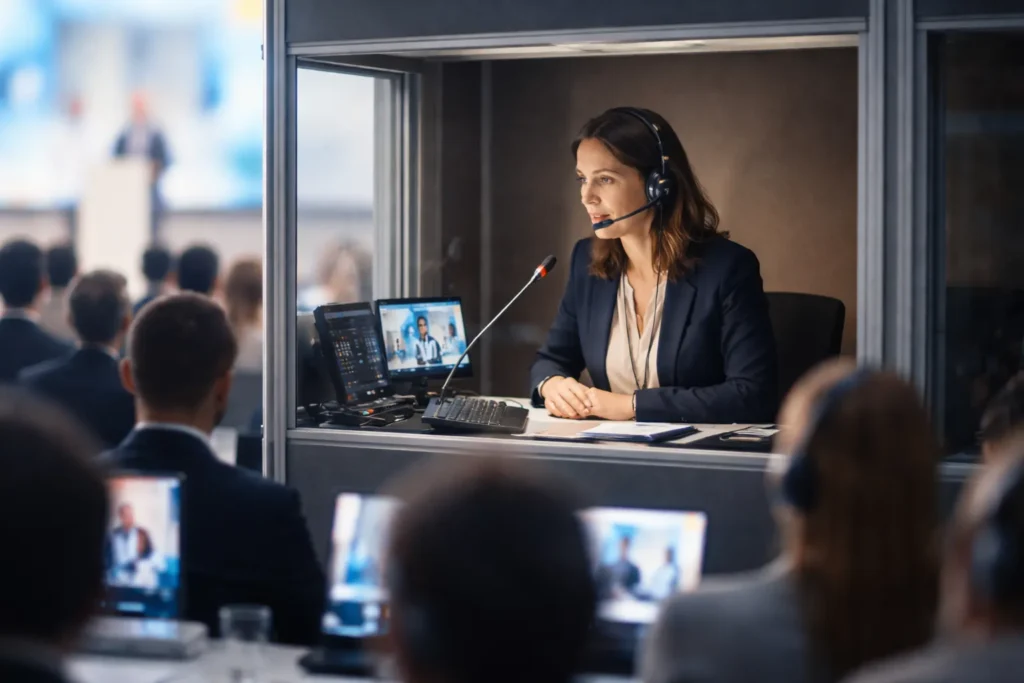
How Much Does Simultaneous Interpretation Cost: A Complete Guide for Events
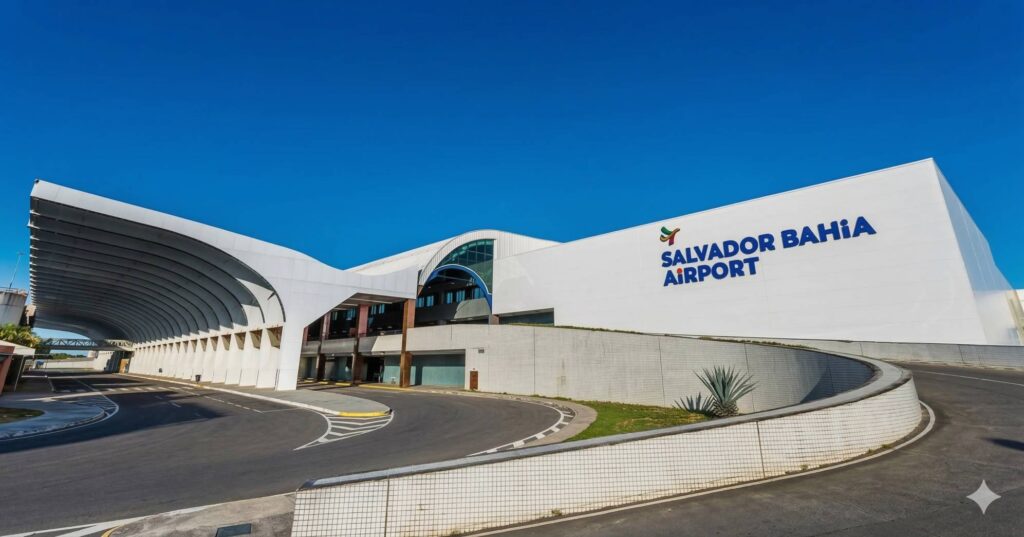
VINCI Airports: Interpretation and Translation Services for the Salvador Airport Transition